Article
Business Inisights | Wellington Revitalisation
5 Minute Read
Is Wellington the city the future workforce is looking for?
Cities don’t attract talent by accident. They build for it.
More than half of New Zealand’s working age population is now Millennial or Gen Z, and where they choose to live and work is fast becoming a property question, not just a workforce one.
It’s changing where people shop, eat and choose to spend their time, creating opportunities for office, retail, and hospitality.
Across Courtenay Place, Te Ngākau Civic Precinct, and the Wellington Pavilion, Wellington is investing in exactly the kind of energy, safety, and connectivity that draws people to a city.
For commercial real estate, it means a capital growing more appealing to the next generation of workers - and with it, stronger long-term demand for office, retail, and hospitality space.
That investment is already starting to show. Three major projects, each breathing life into a different part of the capital and together telling a bigger story about where Wellington is heading.
Te Ngākau Civic Precinct
A multi-year programme is restoring Te Ngākau as Wellington’s civic and cultural heart, with upgrades to Civic Square, the Central Library, City Gallery, Town Hall, and the surrounding public spaces. The goal is a safer, more resilient civic precinct that reconnects people with the city and its waterfront.
The most visible milestone so far is the reopening of Te Matapihi ki te Ao Nui Central Library, following an extensive strengthening and redevelopment programme.
Shaped through public consultation and co-design with mana whenua, the library now integrates traditional library services with Wellington City Archives, creative learning spaces, galleries, makerspaces, and a recording studio - a genuinely multi-purpose civic asset built to encourage people into the city centre beyond the traditional nine-to-five.
For property, a stronger civic precinct has a flow-on effect. It lifts activity right through the central city, driving greater visitation and activation, and supports surrounding office and retail markets. It’s also the kind of investment that builds confidence for future private investment in the area.
Known as Wellington’s entertainment strip, Courtenay Place is on track to become the city’s premier place to play. The precinct plan is focused on lifting safety, activation, and investment appeal across one of the city’s busiest entertainment and commercial areas, building on momentum already created by the refurbished St James Theatre and Tākina Wellington Convention and Exhibition Centre.
Wellington Pavilion Redevelopment
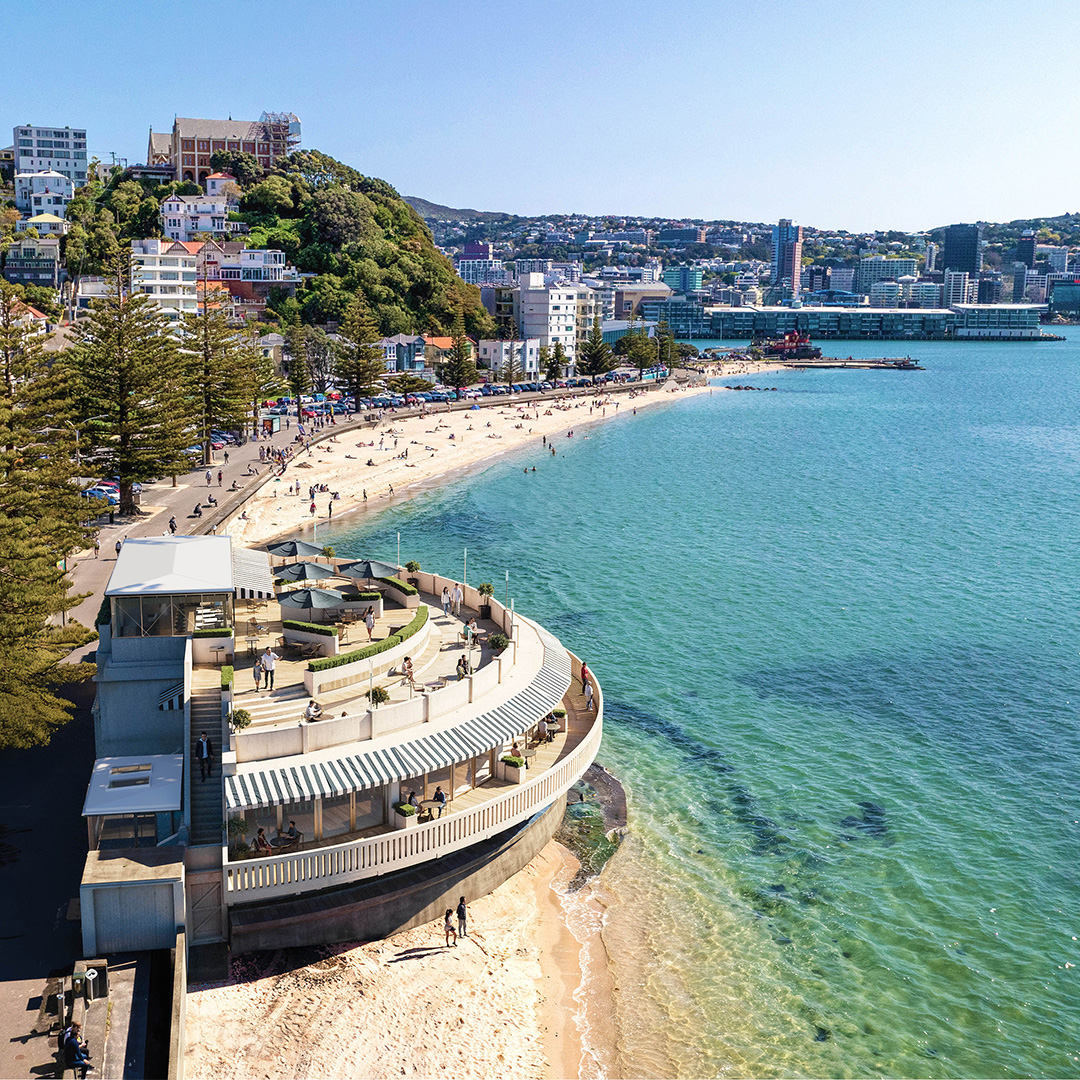
On the waterfront, the heritage-listed Wellington Pavilion is getting a much-needed refresh. Earthquake strengthening is paving the way for its redevelopment into a hospitality and wellness destination - a new café, restaurant, bars, hot pools, and wellness facilities, with free public access to the roof terrace retained and accessibility improved throughout. The reopening is expected to coincide with the 90th anniversary of the original bathing pavilion.
For property, the redevelopment will activate one of Wellington’s most prominent waterfront locations, adding to the city’s hospitality and tourism offering, and enhancing surrounding commercial and retail activity.
Zoe Smith, Associate Director - Retail at CBRE, says “these developments are exactly what Wellington needs right now. We’re already hearing great feedback from retailers about the reopening of Te Matapihi Central Library, and once ‘The Court’ on Courtenay Place and the Band Rotunda are complete, that’ll bring real energy back to some of the city’s most important precincts.”
Courtenay Place Precinct
Private investment is following suit. Primeproperty Group’s redevelopment of the former Reading Cinemas site, to be rebranded as ‘The Court’, will transform a long vacant, earthquake-prone building into a mixed use destination for cinema, retail, and hospitality, reconnecting Courtenay Place with neighbouring hubs including Wakefield Street, Tākina, Te Papa, and the waterfront.
The potential payoff is greater foot traffic, stronger trading conditions for retail and hospitality operators, and increased investor confidence in the precinct.
The Te Aro Hā group is also supporting the revitalisation of the Courtenay precinct. Their vision is to define a clear neighbourhood identity, celebrate the area’s different characteristics and establish an 18-hour precinct that welcomes people from early morning into the late evening.
So what does this all add up to?
For commercial real estate, the answer comes down to three things.
City revitalisation drives commercial demand - revitalised urban precincts bring greater foot traffic, stronger business confidence, and better experiences for the people using them. And each of these projects is playing its part, from Courtenay Place’s renewed entertainment appeal to the refresh of Te Ngākau Civic Precinct, and the Wellington Pavilion’s waterfront activation.
Amenity is becoming a competitive advantage - occupiers increasingly value what exists around a building as much as what’s inside it. Each of these projects adds cultural, recreational, and hospitality experiences that will lift Wellington’s overall appeal as a place to live and work.
Supporting talent attraction and retention - Wellington’s investment in public spaces, cultural venues, and urban experiences helps reinforce its reputation as a desirable city for younger generations. That matters as organisations compete for talent and look for office locations that employees actively want to use. CBRE’s research suggests real estate decisions that prioritise future workforce preferences are more likely to deliver long-term organisational value.
David Fisher, Director - Office Leasing at CBRE, says “this is changing how businesses think about their offices. It’s no longer just a space, it’s a tool for attracting and keeping people. Organisations that get that right will be better placed to compete for talent.”
That’s the shift Wellington is putting into action.
Individually, Courtenay Place, Te Ngākau Civic Precinct, and the Wellington Pavilion are three separate projects, each with its own timeline, budget, and purpose. Together, they make a compelling case for Wellington as a city worth living, working and playing in.
Wellington is showing that cities do not attract talent by accident. They are built for it, precinct by precinct.