Article
Business Insights | Closing the gap on hybrid – what office occupiers are doing next
CBRE’s office occupier surveys shed light on the evolution of hybrid working in New Zealand and around the world.
January 8, 2026

CBRE New Zealand has released its third annual Office Occupier Sentiment Survey, providing insights and data from New Zealand companies on evolving hybrid working practices and comparing trends here with global cities. Once again, New Zealand has emerged as a leader in office-based working, although hybrid remains firmly entrenched.
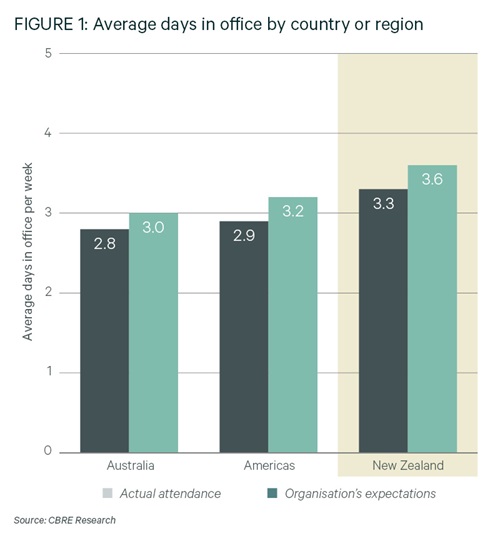
This year’s survey shows that while hybrid working is still very popular in New Zealand, Kiwis are spending more days per week in the office than their counterparts in Australia and the Americas.New Zealand’s average office utilisation rate (the percentage of office space occupied during a typical work week) is at 64% in 2025, notably higher than the averages in Australia (52%) and the Americas (51%). This trend is positive for the future of our CBDs, where retail and hospitality occupiers rely on office workers for steady weekday business.
However, despite New Zealand’s comparatively high rates of office-based working, the survey highlights a gap between how much time employers want their staff to spend in the office and how often staff want to be there.
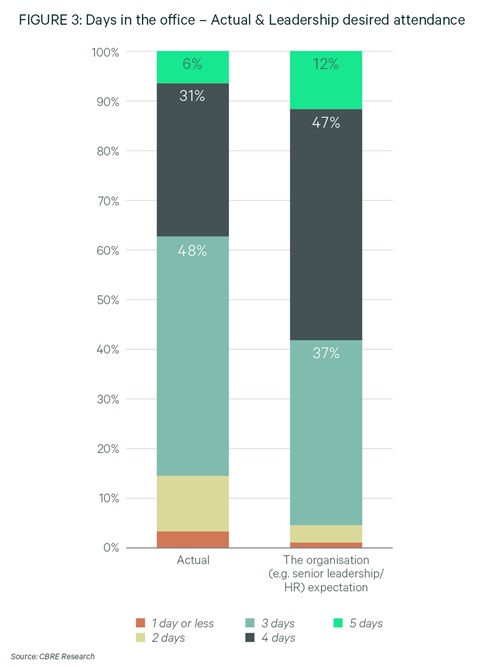
Employers’ aspirations are leaning towards employees spending four days in the office per week. However, our 64% utilisation rate equates to about three days—similar to 2024 and only slightly higher than 2023. This stronger management drive towards office-based working that has emerged in 2025 is a key change from previous years.
New Zealand office attendance surpasses aspirational rates in Australia & Americas
CBRE’s 2025 US and APAC Regional Office Occupier Surveys show a consistent push from employers for more in-office work time—similar to the trend in New Zealand. However, New Zealand’s actual attendance (3.3 days) is well ahead of Australia and the USA and even exceeds the aspirational targets set by employers in those countries.The biggest change in 2025 is management intent. Leadership is now pushing office attendance and decision-making around hybrid work has shifted up the hierarchy.
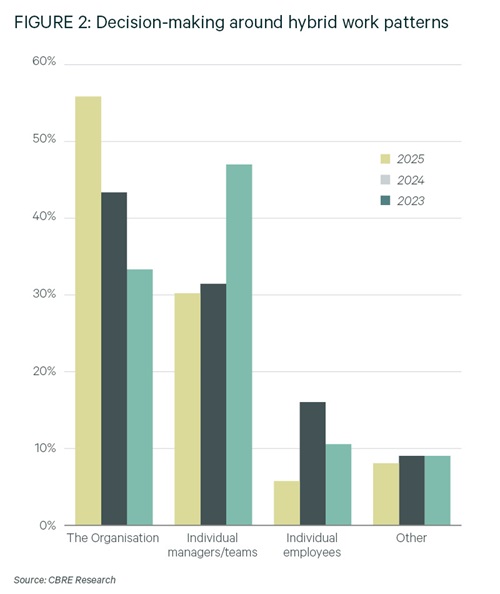
There is a growing desire nationally among organisations to lift office attendance, with senior leadership taking a more active role in setting expectations. When it comes to who sets the guidelines within the organisation for time spent in the office, the centre of gravity has moved from team‑by‑team discretion to organisation‑led expectations.
However most employers still stop short of hard mandates enforcing minimum office-based work days. Only 11% of respondents reported having formal incentives or consequences tied to time spent in the office. This illustrates the delicate balance that organisations must now navigate, with any mandated rules likely to be met with reduced employee satisfaction. This presents a real challenge for organisations, as hybrid working becomes more entrenched.
“Senior leadership teams are asking for higher office attendance, as it supports mentoring, workplace culture and collaboration. However staff like hybrid working and three days a week in the office has become the norm. It’s crucial for employers to find a balance that maintains employee satisfaction and talent attraction alongside better in-office working outcomes.”
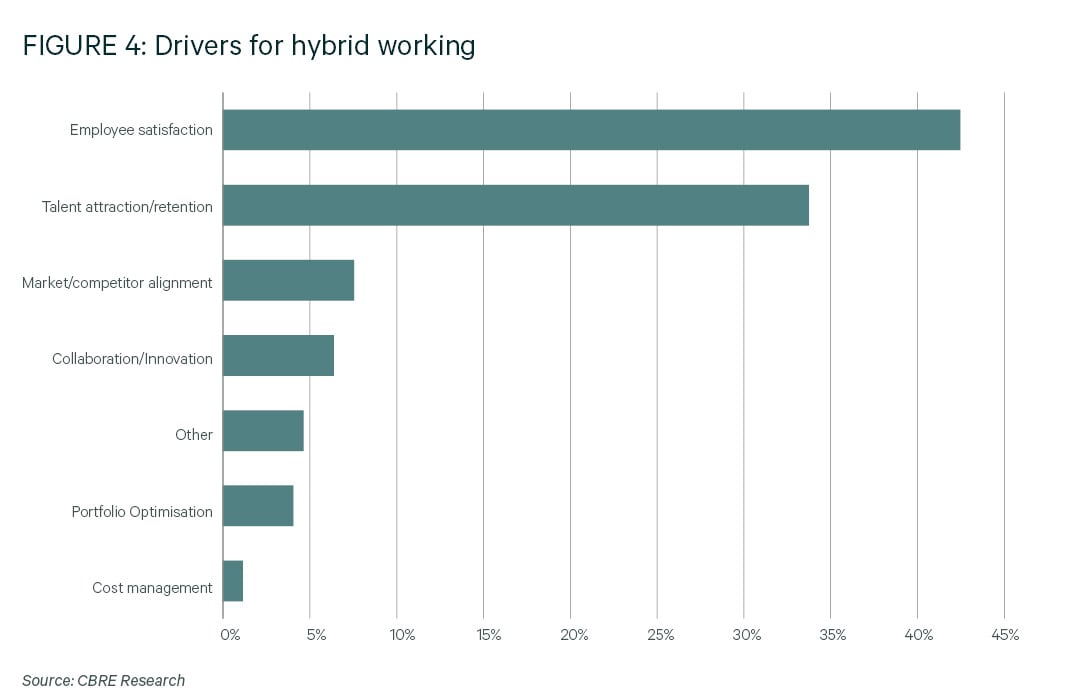
Employers know the importance of providing a workplace and team culture that supports talent attraction and retention, especially in New Zealand’s relatively smaller labour market. Hybrid working therefore remains firmly entrenched as the preferred model, with 93% of organisations supporting it—a slight increase on last year’s 91%.
Kirstin Cooper says the 2025 results illustrate a ‘nudge’ rather than a mandated approach to days spent in the office, as businesses find the right balance between achieving higher levels of office-based working and the need to attract and retain staff.
“Simply asking for more days in the office hasn’t resulted in increased attendance. So employers will either need to accept the current hybrid pattern, or move to clearer policies and incentives to achieve their desired outcomes.”
Better traction is likely to be achieved when policy and place work together. Organisations that prioritise investing in the quality of their physical working environments have a better chance of ‘earning the commute’ and can credibly ask for more in-office time.
Campbell Pritchard, CBRE’s National Director of Office Leasing, says the strategies most often pursued by tenants are relocations to better quality, high-amenity premises and consolidation of under‑used space.
This is reflected in the survey responses. 31% of respondents are planning a relocation and a combined 65% have either already adjusted their workplace for hybrid or intend to do so.
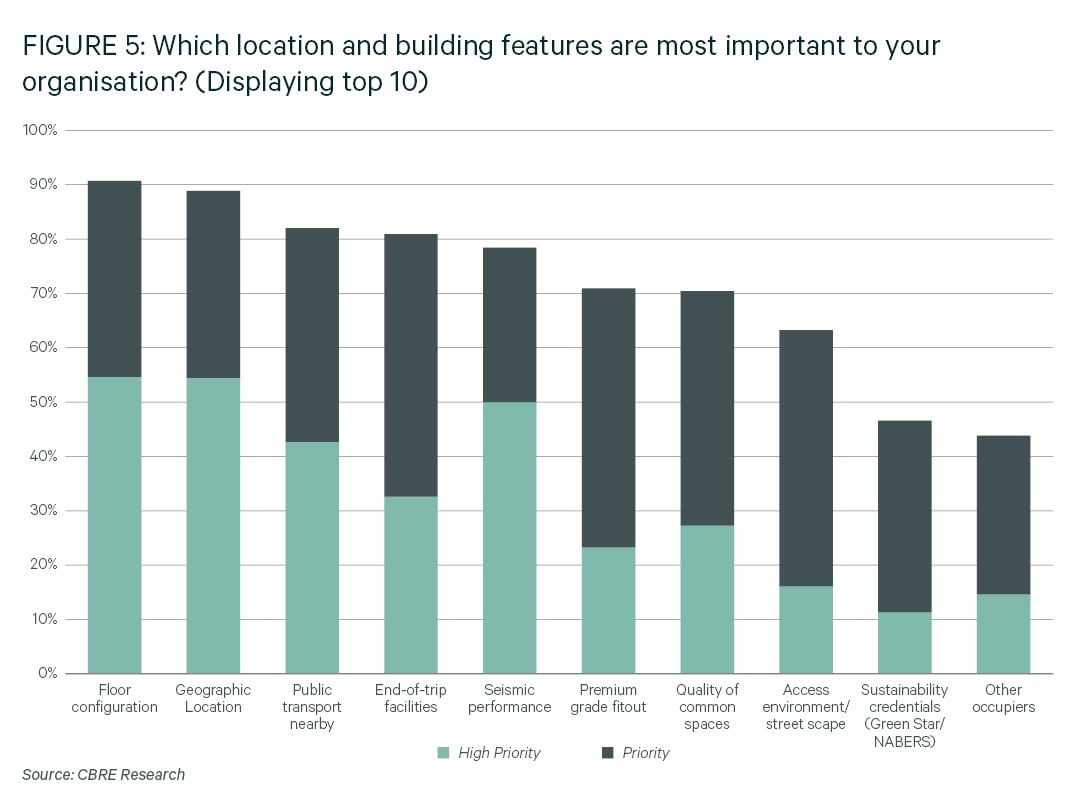
“Premium grade, well-located office space with excellent amenity is recognised as the key factor in attracting staff into the office more often. Efficient floor configuration, a great location and access to transport, supported by end‑of‑trip facilities are the main considerations for tenants in 2025.”
Kirstin Cooper outlines three key takeaways for occupiers:
- Decide your policy and follow through.
“Hybrid working is entrenched, employees value it and it remains a cornerstone of staff attraction and retention. However respondents this year stressed the importance of supporting junior employees with mentoring and guidance, which works best face-to-face. Good workplace culture and ensuring employees are well supported, both in terms of wellbeing and productivity, are also better achieved in the office. But without clearer policies and rules on hybrid working, current utilisation rates will plateau.” - Make the office the best tool for the job.
“It’s far easier to ask people to come into the office when the office is genuinely a better place to work than home. Many occupiers are actively looking to refurbish their offices or relocate to offer better-designed spaces and great end-of-trip facilities. Location is also imperative. The easier the commute, the better.” - Measure workplace utilisation effectively.
“With real estate costs forming a significant proportion of occupier budgets, robust office utilisation data is key to space optimisation and future planning. However, nearly half the organisations surveyed are still relying on visual observations. If you want to clearly understand the opportunities to use space more efficiently, consider leveraging technology such as access card or network data to provide reliable insights.”
“We advise our clients to consider any relocation plans as early as possible before current lease expiries. Premium and A-grade options remain competitive in most main centres in New Zealand and larger-scale leasing requirements need more lead time.”