Article
Business Insights | How amenities, retail and flexibility are supporting leasing decisions
October 8, 2026 5 Minute Read
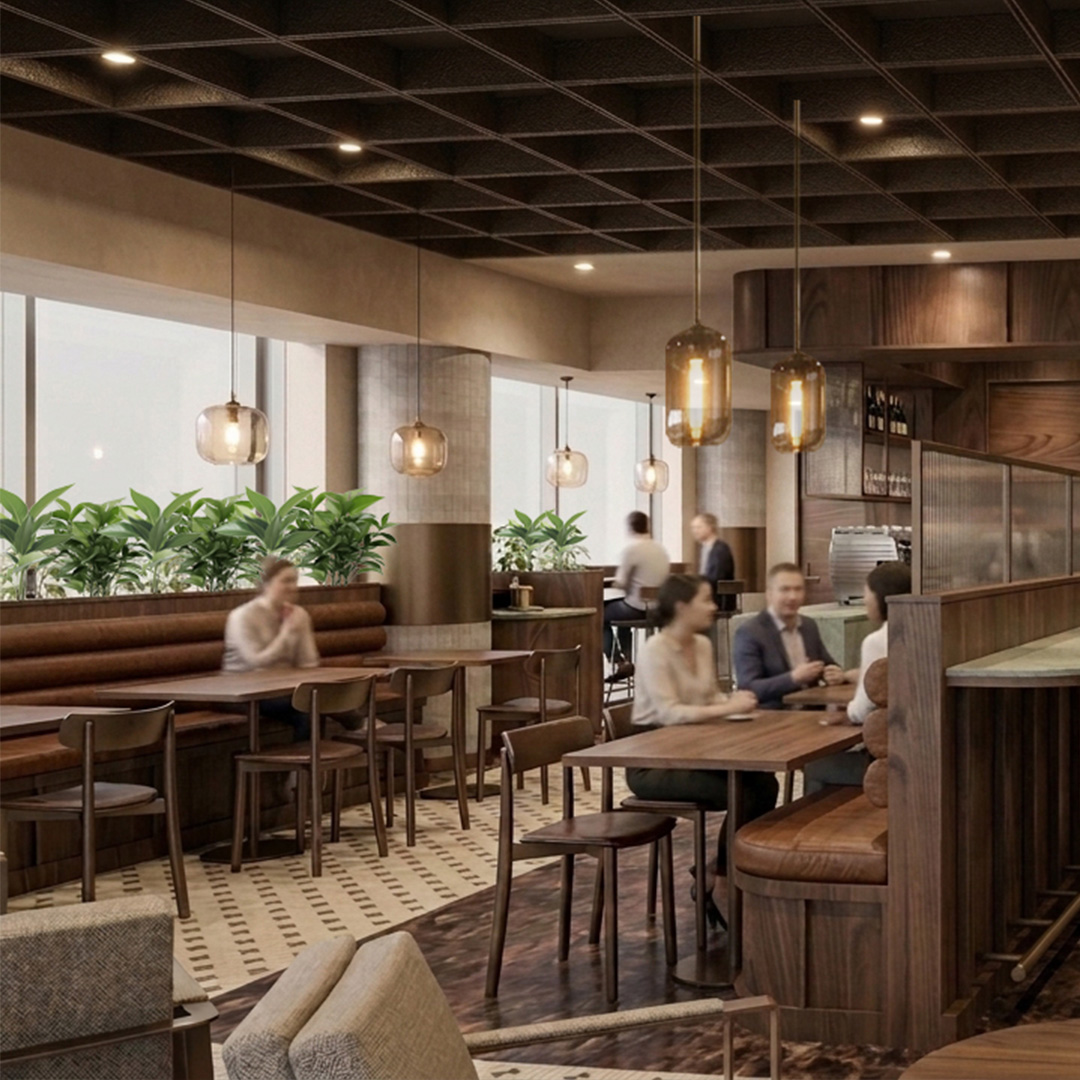
Experience, certainty and speed are the new drivers of office leasing.
Wellington’s commercial property market is undergoing a fundamental shift. While location, lease terms and building quality remain important, occupiers are also weighing up broader considerations - the overall experience that a building and its surrounding precinct provide. From workplace amenities and end-of-trip facilities to cafés, hospitality and activated ground-floor retail, landlords are finding that integrated experiences are powerful tools for attracting and retaining tenants.The adoption of hybrid working, advances in technology and AI, and changing workforce requirements mean many organisations no longer need the space they took on when their current lease began. Elevated vacancy has given tenants more choice and increased competition between buildings. In this environment, landlords are now offering more than office space - they must offer an experience.
The experiences occupiers are looking for.
Today’s occupiers are assessing every touchpoint, from the arrival experience and lobby presentation through to end-of-trip facilities, cafés, wellness spaces and shared amenities. These elements are becoming increasingly important for employers seeking to attract staff back into the office and create workplaces that support collaboration, wellbeing and culture.Features once treated as nice-to-haves such as; premium end-of-trip facilities, concierge services, wellness offerings and upgraded common areas are becoming essential building infrastructure. They turn office buildings into destinations and give employees experiences that cannot be replicated at home.
Matt Hince, senior director of office leasing at CBRE, said tenants now expect “the entire experience within prime grade assets” - looking beyond the four walls of their tenancy when they make leasing decisions.
Activated retail adds to that appeal. Quality food and beverage operators, convenience retail, wellness providers and service businesses improve the daily experience for office workers and benefit from the steady customer base the building’s occupiers provide. Stronger office occupancy supports retail performance, and good retail amenity strengthens a building’s appeal to prospective tenants.
Amenity investment is paying off.
The business case runs well beyond employee convenience. Landlords increasingly treat these upgrades as strategic capital investments that support leasing outcomes, tenant retention and asset performance.At the CBRE-managed Majestic Centre at 100 Willis Street, a refurbishment of the lobby and end-of-trip facilities helped secure about 13,550sqm of lease renewals and expansions, or 52% of the building’s net lettable area. A further 2,250sqm of new leasing transactions followed the upgrade.
Zoe Smith, associate director of retail leasing at CBRE, said the refurbishment was also the catalyst for securing a high-quality new café in the lobby, run by one of Wellington’s most experienced and respected operators.
“The Lab Café opened in the building’s lobby at the start of this year and has introduced excellent public activation to a space that had been without a café since Covid.”
The refurbishment work also included a new arrival experience, premium finishes, native garden installations and modern end-of-trip facilities with showers, lockers, bike and scooter storage and charging. These improvements helped reposition the building in the market and reinforced its appeal to both existing and prospective occupiers.
The implications extend beyond leasing performance. Buildings with a stronger workplace experience are better placed to defend rental levels, maintain occupancy and compete with newer developments. In a tenant-favourable market, amenity upgrades can reposition older assets and materially improve how occupiers and investors perceive them.
This philosophy is increasingly evident across Wellington’s office market. Another example is RJH Holdings’ significant investment into upgrading Harbour Tower at 2 Hunter Street. This project has transformed the building into a highly amenitised workplace that can compete with the city’s leading office developments.
The rise of ‘plug-and-play’ offices.
Speculative turnkey suites are another trend reshaping leasing decisions. For many businesses, particularly smaller organisations with up to around 40 staff, designing and constructing a fit-out can be costly, time-consuming and uncertain. Fully fitted out spec suites give immediate occupancy, cost certainty and less delivery risk, and let occupiers concentrate on running their businesses rather than managing a fit-out project.Importantly, because the landlord has already made the fit-out investment, tenants can often secure more lease flexibility than they would on a bespoke fit-out, which needs a longer commitment to amortise costs.
Recent leasing at Grant Thornton House, 1 Willis Street and 157 Lambton Quay demonstrates the growing demand for high-quality fitted-out accommodation and how well this strategy works in attracting occupiers. Businesses want speed to occupancy, lower capital expenditure, flexibility and certainty. In a market where headcounts, workplace strategies and future space requirements remain under review, turnkey suites provide an adaptable solution that aligns with evolving occupier needs.
The new leasing toolkit.
The convergence of amenity-led asset repositioning, activated retail environments and fitted speculative suites reflects a broader evolution in landlord strategy. Location and the quality of the tenancy itself no longer determine success on their own. Increasingly, it depends on how well a building supports the wider needs of the occupiers, customers and communities that interact with it.Wellington occupiers are prioritising experience, certainty and flexibility, and buildings that combine strong amenity with well-executed fitted space are best placed to capture demand, retain tenants and protect long-term value.
As the office market continues to evolve, premium amenities and ‘plug-and-play’ workplaces are becoming an expected part of a leasing strategy, rather than a point of difference.